
Published May 19, 2026
Why Cook County Landlords Are Shifting to Multi-Unit Properties This Season

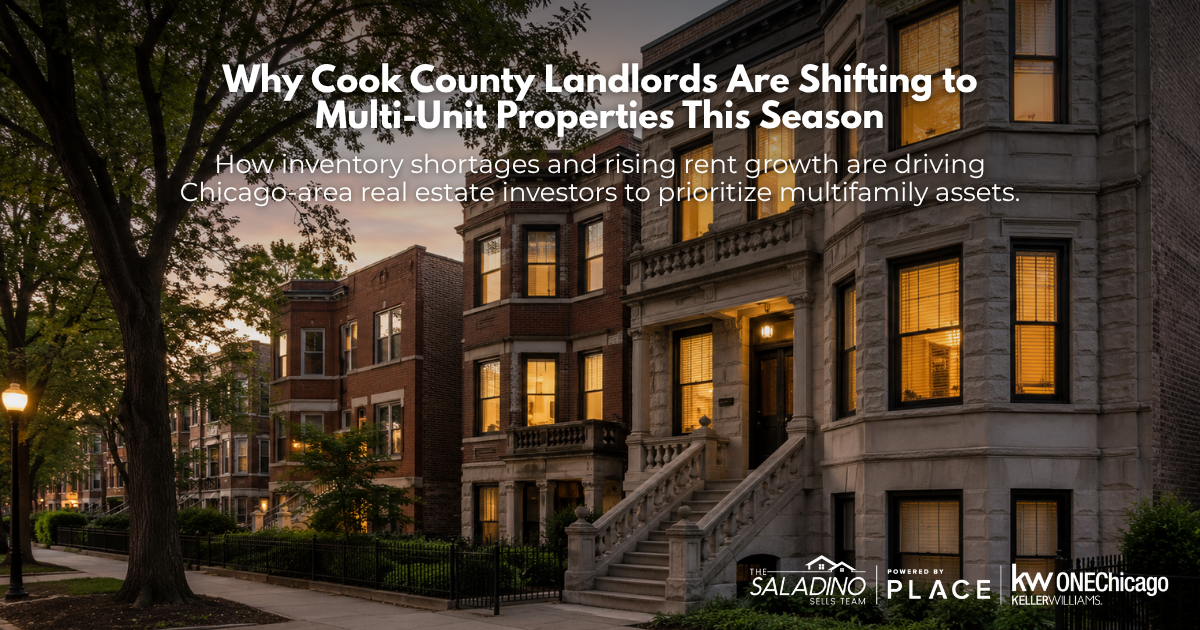
How inventory shortages and rising rent growth are driving Chicago-area real estate investors to prioritize multifamily assets.
The real estate landscape across Chicagoland is undergoing a definitive transition. Single-family rentals, once the go-to anchor for local real estate portfolios, are taking a backseat. This season, a clear trend has emerged: Cook County landlords are aggressively shifting their focus toward multi-unit properties. Whether you are looking at two-flats in Logan Square, brick three-units in Avondale, or mid-sized apartment buildings in Southern Cook County, the data points in one direction. Multifamily assets are winning the day.
The Saladino Sells Team has broken down the core market dynamics driving this sudden structural shift—and what it means for your investment portfolio.
1. The Single-Family Inventory Squeeze
The primary driver behind this multifamily pivot is a simple lack of choices. Cook County is experiencing an unprecedented housing shortage, with inventory down sharply compared to pre-pandemic baselines.
For landlords looking to scale their portfolios using single-family homes, bidding wars are driving up acquisition costs and thinning out profit margins. Multi-unit properties allow investors to bypass the highly congested single-family retail market, securing multiple streams of income through a single commercial or residential multifamily transaction.
2. Low Supply and High Renter Demand
While inventory for single-family purchases is low, the construction pipeline for new multifamily units in the Chicago metro area has also hit its lowest level since the Great Financial Crisis.
Because very little new supply is hitting the market, competition among renters is intense. Current data reveals that:
- Average occupancy rates across Chicagoland are hovering at a remarkably tight 95%.
- Annual rent growth in the region is climbing steadily by 3% to 5%, vastly outpacing the national average.
For a landlord, this supply-and-demand imbalance ensures reliable tenant placement and highly predictable revenue streams.
3. Scale Efficiencies Mitigate Rising Operating Costs
Operating a rental property in Cook County requires navigating strict regulatory frameworks like the Chicago Residential Landlord and Tenant Ordinance (RLTO), alongside rising property taxes and insurance premiums.
When costs rise, scaling up becomes an economic necessity. Multi-unit buildings offer superior operational efficiency:
The Power of Multi-Unit Scale: Replacing a single roof over a four-unit building protects four income-generating streams under one capital expenditure. Doing the same for four separate single-family homes quadruples your logistics, maintenance coordination, and structural costs.
By consolidating units under one geographic location, landlords drastically lower their per-unit property management, accounting, and maintenance expenses.
4. Superior Risk Diversification
A single-family rental operates on a binary revenue model: it is either 100% occupied or 100% vacant. If a tenant moves out, the landlord covers the mortgage out-of-pocket until a replacement is found.
Multi-unit properties inherently diversify vacancy risk:
| Property Type | Vacant Units | Remaining Income Stream | Financial Impact |
| Single-Family Home | 1 Unit (100%) | 0% | Complete Out-of-Pocket Mortgage Coverage |
| 3-Unit Building | 1 Unit (33%) | 66.6% | Remaining Units Generally Cover Operating Costs |
| 6-Unit Building | 1 Unit (16.6%) | 83.4% | Portfolio Remains Consistently Profitable |
This safety net allows investors to maintain positive cash flow even during standard tenant transitions or unit renovations.
Maximizing Your Cook County Investment Strategy
The shift toward multi-unit properties isn’t just a passing trend; it is a calculated response to the inventory restrictions and economic realities of the modern real estate market. Savvy Cook County investors are recognizing that multifamily assets offer the cash flow protection, scalability, and appreciation potential needed to thrive today.
Are you looking to capture these market dynamics and expand your portfolio into Cook County multifamily real estate? Whether you want to scout premier multi-unit listings or analyze cap rates in target neighborhoods, the Saladino Sells Team is here to guide your next strategic move.
Connect with the Saladino Sells Team today to find the right investment opportunities in your market.

Michael Saladino
Managing Broker | Saladino Sells Team | Keller Williams ONEChicago | PLACE
or another way