Published June 30, 2026
The Finished Basement Delusion: The Costly Mistake of Buying a Chicagoland Home with Unpermitted Lower-Level Living Space

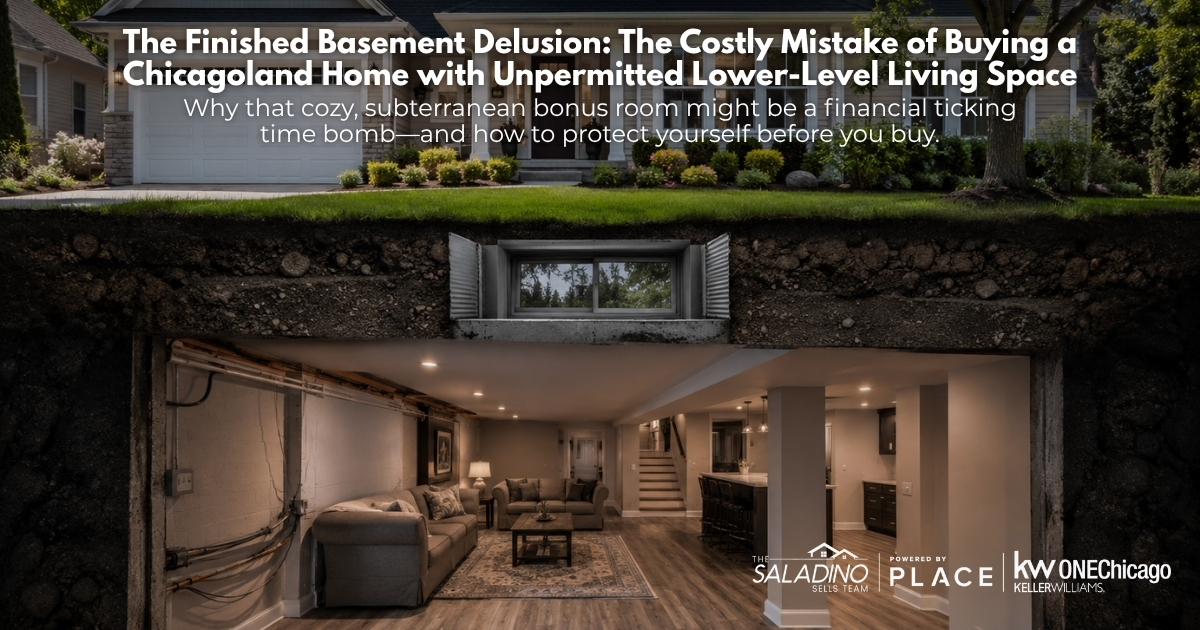
Why that cozy, subterranean bonus room might be a financial ticking time bomb—and how to protect yourself before you buy.
Picture this: You’re touring a charming home in Naperville, Evanston, or right in the heart of Chicago. The main floor is great, but then you walk downstairs. You’re greeted by a stunning, fully finished basement complete with a custom bar, a spacious rec room, a plush guest bedroom, and a full bathroom.It feels like a jackpot. You’re already imagining movie nights and hosting out-of-town guests.
But in the Chicagoland real estate market, things aren't always what they seem. This lower-level oasis might actually be an unpermitted finished basement, and falling for it is one of the most expensive mistakes a homebuyer can make.
Here is why the "finished basement delusion" is trapping buyers, and how you can avoid a costly regulatory nightmare.
The Illusion of "Free" Square Footage
When a basement is finished beautifully, it’s easy to let your guard down. Sellers often market these spaces as a major selling point, subtly factoring that extra livable square footage into their mental asking price.However, there is a massive difference between finished space and legal, permitted space.
If the previous homeowner tackled the basement as a DIY weekend project or hired an under-the-table contractor to skip municipal fees, that space doesn't legally exist as living area. In the eyes of local Chicagoland building departments, it’s just a raw concrete cellar with unapproved modifications.
The Hidden Costs of Unpermitted Basements
Buying a home with unpermitted work isn't just a minor technicality; it carries severe financial and legal risks.1. The Appraisal Disconnect
Appraisers are bound by strict guidelines. If a finished basement lacks the proper municipal permits and doesn't meet local building codes (such as specific ceiling heights or proper egress windows), the appraiser may value the space as unfinished. This can lead to a massive appraisal shortfall, meaning your lender won't approve the loan amount you agreed to pay, forcing you to come up with cash or walk away.2. The Dangerous Code Violations
Permits exist to ensure safety. Unpermitted basements are notorious for hidden hazards:- Electrical Risks: Substandard wiring hidden behind drywall can be a major fire hazard.
- Plumbing & Mold: Improperly installed basement bathrooms can lead to sewage backups and catastrophic mold growth.
- No Egress: For a basement room to legally be called a "bedroom," it must have an egress window or door large enough for an adult to escape during a fire. Without it, it’s a death trap.
3. Denied Insurance Claims
Imagine a historic Chicagoland summer storm hits, and the basement floods. You file a claim with your homeowners insurance, only for the adjuster to discover the living space and bathroom were installed without permits. Your insurance company can legally deny coverage, leaving you to foot a tens-of-thousands-of-dollars restoration bill entirely out of pocket.4. Municipal Fines and Deconstruction
Chicagoland municipalities—from the City of Chicago to suburbs like Arlington Heights or Oak Park—take building codes seriously. If the city discovers the unpermitted work, they can fine you, force you to open up the drywall for retroactive inspections, or order you to completely tear out the finished work at your own expense.How to Protect Yourself Before You Close
You don’t have to completely run away from a home with a finished basement, but you do need to do your homework.| What to Look For | Why It Matters |
| Permit History Search | Request the property’s full permit history from the local village or city hall to verify the basement was legally signed off on. |
| True Egress Windows | Ensure any basement bedroom has a code-compliant window leading directly outside. |
| A Detailed Home Inspection | Hire a licensed inspector who will specifically look for "tell-tale" signs of DIY basement work, like improper ventilation or ungrounded outlets. |
The Bottom Line
A finished basement is a fantastic asset—if it was done right and done legally. Don't let a beautifully staged lower level blind you to the potential liabilities hiding behind the drywall.When navigating the complexities of the Chicagoland market, you need a real estate team that knows exactly what red flags to look for. We protect our clients from the "basement delusion" by digging into the public records long before you sign on the dotted line.
Thinking about buying or selling in the Chicagoland area? Don't leave your investment to chance. Contact The Saladino Sells Team today to ensure your next move is a safe and smart one.