
Published June 9, 2026
Unincorporated Cook County vs. Incorporated Villages: What the Structural and Tax Differences Mean for Buyers

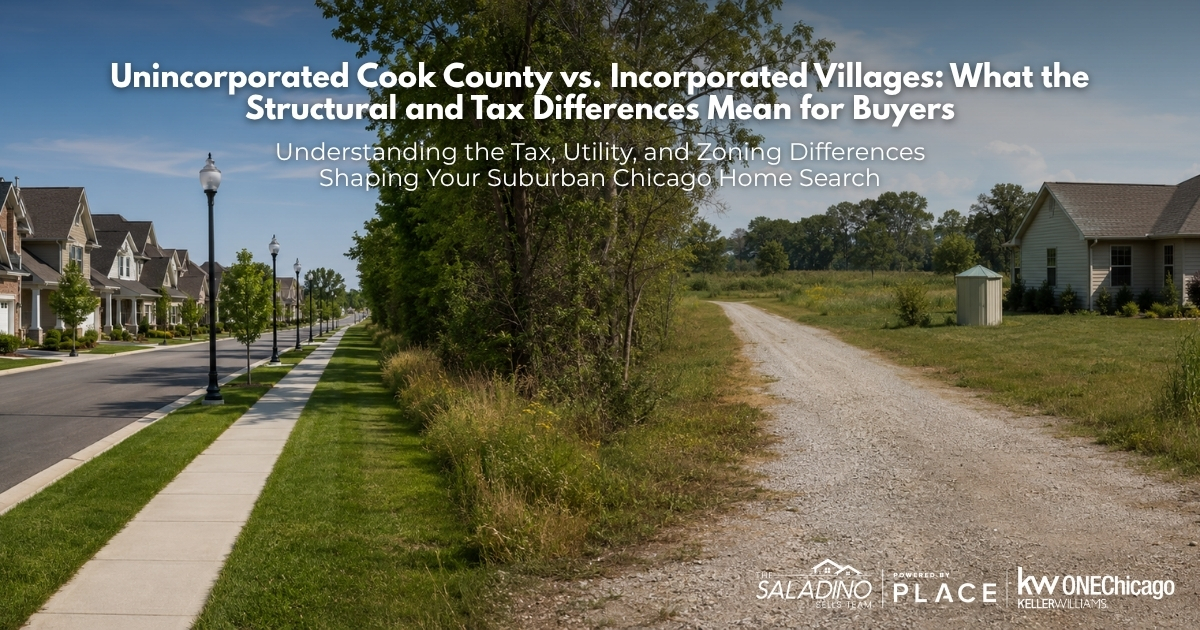
Understanding the Tax, Utility, and Zoning Differences Shaping Your Suburban Chicago Home Search
Are you hunting for a home in the Chicago suburbs and noticing vastly different price tags—and property tax rates—just a few streets apart? You might be looking at the dividing line between an incorporated village and unincorporated Cook County.
For homebuyers, choosing between these two designations isn’t just a matter of jurisdiction; it fundamentally shapes your daily life, your monthly housing costs, and what you can legally do with your property.
Here is a breakdown of what these structural and tax differences mean for your wallet and your lifestyle.
If you value strict neighborhood uniformity and beautifully manicured public spaces, an incorporated village is for you. If you prefer autonomy and fewer bureaucratic hoops regarding how you use your acreage, unincorporated Cook County might feel like freedom.
In unincorporated areas, law enforcement is handled by the Cook County Sheriff's Department. While they are highly capable, their coverage area is massive. Fire protection is usually covered via contracts with neighboring municipal fire departments or specialized fire protection districts. Before buying unincorporated, always ask which specific district responds to the property.
For homebuyers, choosing between these two designations isn’t just a matter of jurisdiction; it fundamentally shapes your daily life, your monthly housing costs, and what you can legally do with your property.
Here is a breakdown of what these structural and tax differences mean for your wallet and your lifestyle.
1. The Tax Equation: Where Does Your Money Go?
The most immediate difference buyers notice is on the property tax bill.- Incorporated Villages: When you buy a home within village limits (like Arlington Heights, Schaumburg, or Palatine), you pay a municipal tax. This money directly funds local resources like municipal police, professional fire departments, library districts, public works, and local parks.
- Unincorporated Cook County: Because you sit outside municipal borders, you do not pay a municipal tax. On paper, this often makes the baseline property tax rate lower.
The Catch: Lower tax rates don't always mean a free ride. Unincorporated residents must often pay out-of-pocket for services that villages include in their taxes, such as private garbage collection, specialized fire protection districts, or well and septic maintenance.
2. Infrastructure & Utilities: Public vs. Private
How your home gets water and handles waste depends heavily on its incorporation status.Incorporated Villages
Villages provide centralized, highly regulated infrastructure. You are connected to municipal water and sewer systems. If a water main breaks or a street needs plowing, the village public works department handles it.Unincorporated Cook County
Many unincorporated properties rely on private well water and septic systems.- Maintenance: As the homeowner, you are entirely responsible for the cost of maintaining, pumping, and eventually replacing your septic tank or well pump.
- Roads and Snow Removal: Streets are typically maintained by the township or the Cook County Department of Transportation, meaning snow plowing schedules might differ drastically from neighboring villages.
3. Zoning, Building Codes, and Freedom
Want to raise backyard chickens, build a massive detached garage, or park a commercial vehicle in your driveway? Your freedom to do so depends entirely on who writes the rules.| Feature | Incorporated Villages | Unincorporated Cook County |
| Governing Body | Local Village Board / Municipal Code | Cook County Zoning Ordinance & Building Code |
| Permitting Speed | Often faster, local inspectors | Can involve longer bureaucratic wait times downtown |
| Strictness | High (Strict rules on aesthetics, fences, vehicles) | Generally more lenient (Fewer restrictions on land use) |
4. Emergency Services: Minutes Matter
In an incorporated village, you are backed by a dedicated local police and fire department, often resulting in rapid response times.In unincorporated areas, law enforcement is handled by the Cook County Sheriff's Department. While they are highly capable, their coverage area is massive. Fire protection is usually covered via contracts with neighboring municipal fire departments or specialized fire protection districts. Before buying unincorporated, always ask which specific district responds to the property.
The Verdict: Which is Right For You?
There is no right or wrong answer—only what fits your goals and lifestyle.- Choose Incorporated if: You want turn-key municipal services, predictable utility infrastructure, top-tier local amenities, and don’t mind paying the municipal taxes that fund them.
- Choose Unincorporated if: You want potentially lower tax rates, desire more land and privacy, want fewer restrictions on property modifications, and are comfortable managing private utilities like well and septic.

Michael Saladino
Managing Broker | Saladino Sells Team | Keller Williams ONEChicago | PLACE
or another way