
Published June 3, 2026
Overlooked Historic Districts: Strict Exterior Rules to Know Before Buying in Evanston or Oak Park

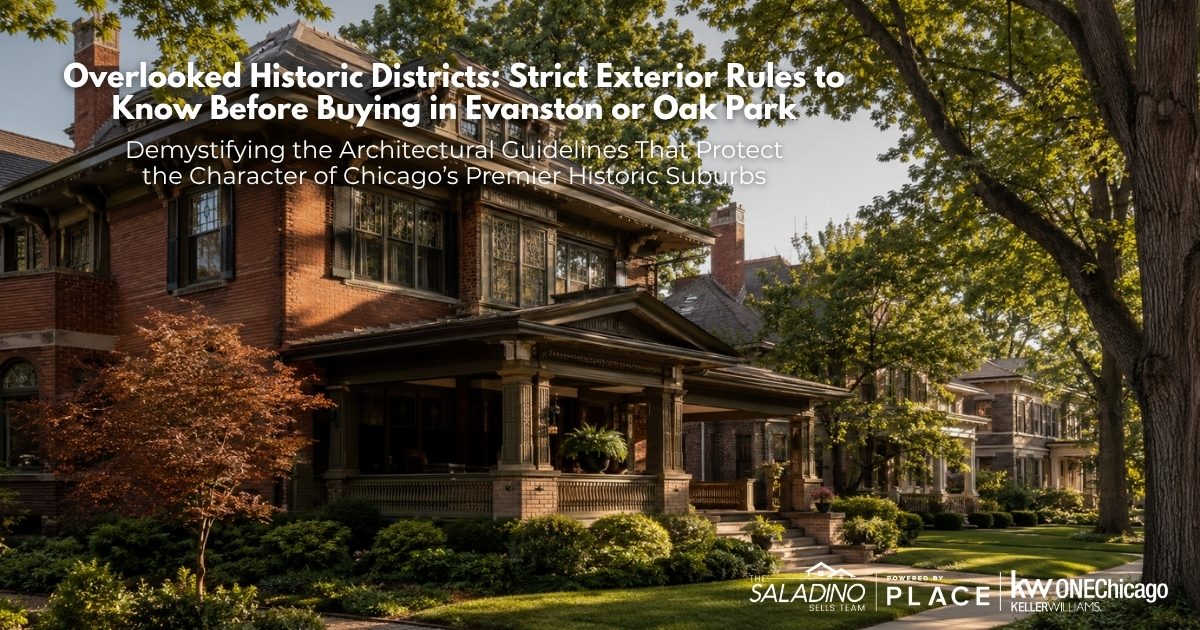
Demystifying the Architectural Guidelines That Protect the Character of Chicago’s Premier Historic Suburbs
For buyers looking at real estate just outside of Chicago, the historic suburbs of Evanston and Oak Park offer unparalleled architectural charm. From striking Prairie School masterpieces to sweeping Queen Annes, these neighborhoods are famous for their tree-lined streets and beautifully preserved homes.However, many buyers fall in love with a property without realizing it sits inside a designated local historic district. While these districts protect property values and maintain neighborhood aesthetics, they also come with a strict set of rules governing what you can—and cannot—do to your home’s exterior.
Before you sign on the dotted line, The Saladino Sells Team has broken down the essential historic preservation guidelines you need to know.
National Register vs. Local Historic Districts: What’s the Difference?
A common point of confusion for home buyers is the distinction between a National Register Historic District and a Local Historic District.- National Register Districts: This is an honorary designation by the federal government. If a home is only on the National Register, you generally face no restrictions on altering or even demolishing the property (unless federal funding is involved).
- Local Historic Districts: This is where the legal teeth are. Both Evanston and Oak Park have local ordinances that legally bind property owners. If your prospective home falls within local boundaries, exterior changes will require municipal review and approval.
Evanston Historic Districts: The Rules of "Visibility"
Evanston boasts several local historic districts (including the Evanston Ridge and Lakeshore districts) overseen by the Evanston Preservation Commission.If you buy a home with landmark status or one located within a local district, any exterior work visible from a public way will trigger a review process.
Strict Rules to Keep in Mind:
- Windows and Doors: You cannot simply head to a big-box hardware store and buy vinyl replacement windows. Replacing windows, entry doors, and even storm doors or storm windows requires a Certificate of Appropriateness (COA). The commission strongly favors repairing original wood windows over replacing them.
- Permit Hold-Ups: In Evanston, the city will not issue standard building permits for exterior work until your Certificate of Appropriateness has been officially vetted and approved.
- The "Study List" Catch: Even if a home isn't officially designated yet, it might be on Evanston’s "Study List." While it doesn’t immediately restrict your rights, it means the city has flagged the property for potential future landmark status.
Oak Park Historic Districts: Contributing vs. Non-Contributing
Oak Park is a global hub for architectural tourism, meaning its Historic Preservation Commission (HPC) runs a tight ship to maintain its cultural fabric.When buying in an Oak Park historic district, the single most important detail to check is whether the property is classified as Contributing or Non-Contributing.
- Contributing Properties: These are buildings that retain their historic integrity and architectural features. Any major exterior alteration or partial demolition requires a COA from the HPC.
- Non-Contributing Properties: These are newer builds or homes that lost their historic integrity through previous renovations. Rules are significantly relaxed for these homes, and many projects can be approved quickly by village staff without a full commission hearing.
Strict Rules to Keep in Mind:
- Material Matching: If you need to repair masonry, stucco, or exterior wood siding, Oak Park’s Architectural Review Guidelines require you to match the original historic materials exactly in composition, texture, and profile. Synthetic materials like vinyl siding or composite decking are heavily restricted on contributing facades.
- What You Can Do Freely: Fortunately, some things remain entirely up to you. Oak Park does not regulate exterior paint colors, interior alterations (unless they impact exterior windows), or standard landscaping and tree plantings.
Quick Reference: Evanston vs. Oak Park Preservation
| Feature | Evanston Regulations | Oak Park Regulations |
| Primary Trigger | Any exterior work visible from a public way. | Any exterior change requiring a building permit on a landmark or in a district. |
| Window Replacement | Requires a COA; strict preference for repairing original wood. | High scrutiny on contributing structures; requires historically accurate profiles. |
| Exterior Paint Color | Not restricted. | Not restricted. |
| Demolition Restrictions | Strict review and potential delays for partial or full demolition. | Complete or partial demolition of contributing structures is heavily restricted. |
Pro Tips for Historic Home Buyers
If you are planning to write an offer on a vintage home in either suburb, protect yourself by taking these three steps:- Check the Map First: Use Evanston’s "About My Place" tool or Oak Park’s interactive zoning maps to verify the exact historic status of the address.
- Consult an Architect Early: If you plan on adding a rear addition, building a new garage, or changing a porch layout, bring a preservation-minded architect to a showing to see if your vision aligns with local guidelines.
- Work with a Local Real Estate Expert: Buying a historic home requires an agent who understands local municipal codes, can navigate the disclosure forms, and knows how to structure your contract contingencies safely.
Considering a move to the North Shore or Western Suburbs? Historic homes are magnificent investments, but they require the right stewardship. Reach out to The Saladino Sells Team today to guide you through the process seamlessly.

Michael Saladino
Managing Broker | Saladino Sells Team | Keller Williams ONEChicago | PLACE
or another way