
Published June 18, 2026
The HOA Special Assessment Surprise: Navigating Sudden Capital Projects in North Shore and Cook County Condos

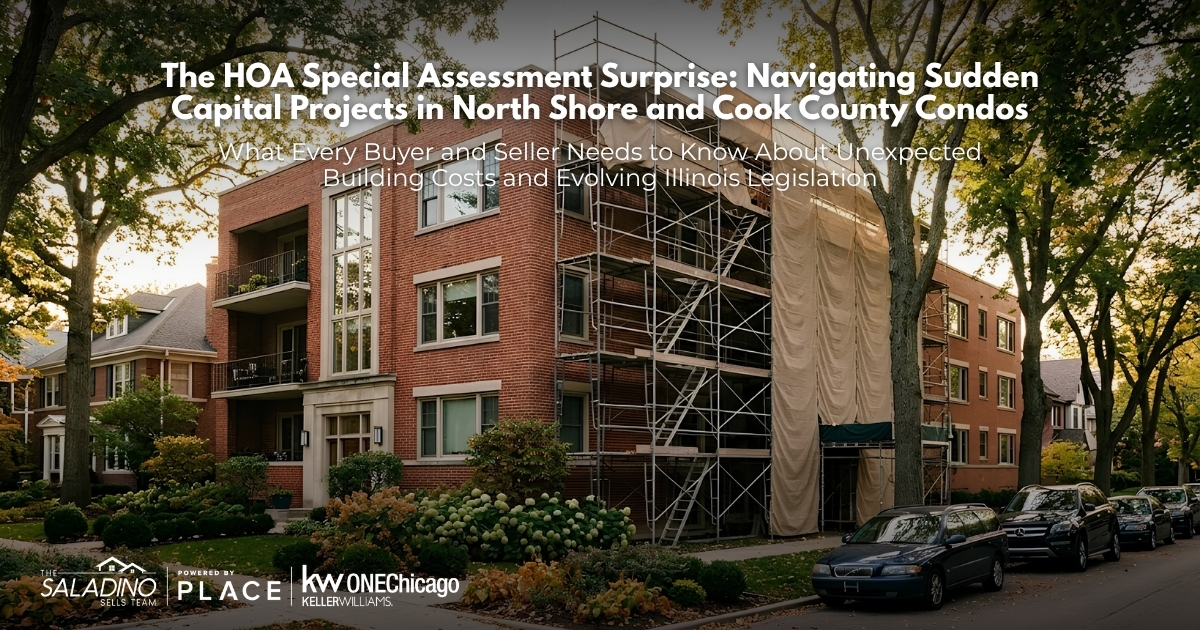
What Every Buyer and Seller Needs to Know About Unexpected Building Costs and Evolving Illinois Legislation
Imagine opening your mail or an email from your condominium association board to find a notice for a five-figure bill due in a matter of months.For many condo owners across the North Shore and greater Cook County, this scenario isn't a hypothetical—it’s a reality. As classic mid-rises, courtyard buildings, and sprawling lakefront complexes age, the need for major capital improvements becomes inevitable. When reserve funds fall short, Homeowners Associations (HOAs) turn to the dreaded special assessment.
With Illinois legislative conversations shifting heavily toward mandatory building safety and structural reserve studies, navigating these sudden capital projects requires a proactive strategy. Whether you currently own a condo or are shopping for your dream home on the North Shore, The Saladino Sells Team has compiled a comprehensive guide to mastering the HOA special assessment surprise.
1. What Exactly Is an HOA Special Assessment?
Regular monthly assessment fees cover a building's predictable operational expenses: routine maintenance, landscaping, snow removal, insurance, and minor repairs. A portion of those fees also trickles into a reserve fund earmarked for long-term expenses like a new roof or updated elevators.The Turn of the Assessment: A special assessment is an additional, one-time or structured fee levied on unit owners to pay for major, unexpected capital projects or emergency repairs that exceed the money available in the reserve fund.In Cook County, typical catalysts for special assessments include:
- Facade repairs and masonry work (critical for compliance with local ordinances)
- Roof teardowns and replacements
- Balcony structural restorations
- Outdated HVAC, plumbing, or elevator overhaul systems
2. The Changing Legal Landscape in Illinois
The conversation surrounding how condos handle their reserves is shifting dramatically. Recent legislative sessions in Springfield have spotlighted bills like HSB 2563/SB 1703, which aim to require mandatory, periodic reserve studies for associations at least every five years.While full mandates continue to evolve, the intent from lawmakers is clear: transparency and fiscal responsibility are paramount. Buyers are legally entitled to examine association financial records, and associations are facing increased pressure to maintain healthy funds to avoid catastrophic financial hits to owners.
3. The Impact on Sellers: Disclose, Disclose, Disclose
If you are trying to sell a condo in Evanston, Wilmette, or Chicago, a looming special assessment can feel like a roadblock. However, honesty is your best legal defense and negotiation tool.- The Illinois Condo Act Mandate: Sellers are legally required to provide prospective buyers with a Section 22.1 disclosure. This document outlines any capital projects anticipated by the association or any currently levied special assessments.
- Negotiating Options: If an assessment is active, sellers can offer to pay it off entirely at closing out of their proceeds, or offer a corresponding price reduction to make the purchase viable for the buyer.
4. The Impact on Buyers: Deep-Dive Due Diligence
As a buyer looking into North Shore or Cook County properties, you should never purchase a condo based on aesthetics alone. Your real estate advocate must help you investigate the building’s financial health.| Due Diligence Checklist | What to Look For |
| Review Association Minutes | Look back at least 12 to 24 months. Are board members arguing about a leaking roof or structural cracks? |
| Analyze the Reserve Fund | Is the fund adequately funded for the size and age of the building, or is it running dangerously low? |
| Request the Reserve Study | Ask if the building has had a professional assessment of their long-term capital repair schedule. |
5. How to Survive an Assessment Surprise
If you already own a condo and are hit with a surprise bill, take a deep breath. You have options:- Attend Board Meetings: Stay active in your community. Special assessments must be voted on and introduced with proper notice. Voice your perspective on payment plans.
- Look into Payment Options: Many associations arrange bank loans for major projects, allowing owners to pay their share over a 5-to-10-year period via a monthly line-item increase rather than a single lump sum.
- Review Your Loss Assessment Insurance: Check your HO-6 condo insurance policy. Many standard policies include "loss assessment coverage," which can help cover your financial obligation if the assessment is tied to a covered insurance event (like storm damage).
Partner With Local Experts
The condo market in Cook County and the North Shore remains vibrant, offering incredible lifestyles from the vibrant streets of Evanston to the lakefront properties of the North Shore. But navigating HOA financials requires an experienced real estate team that knows exactly what red flags to look for.Are you thinking about buying or selling a condo soon? Avoid financial surprises and secure your investment. Contact The Saladino Sells Team today for a strategic look at the local market!
Are you currently weighing a condo purchase and feeling unsure about how to properly audit the building's financial health?

Michael Saladino
Managing Broker | Saladino Sells Team | Keller Williams ONEChicago | PLACE
or another way