
Published September 16, 2026
The $80,000 "Special Assessment Trap": What Naperville Buyers Must Scrutinize in Attached Townhome Reserve Studies

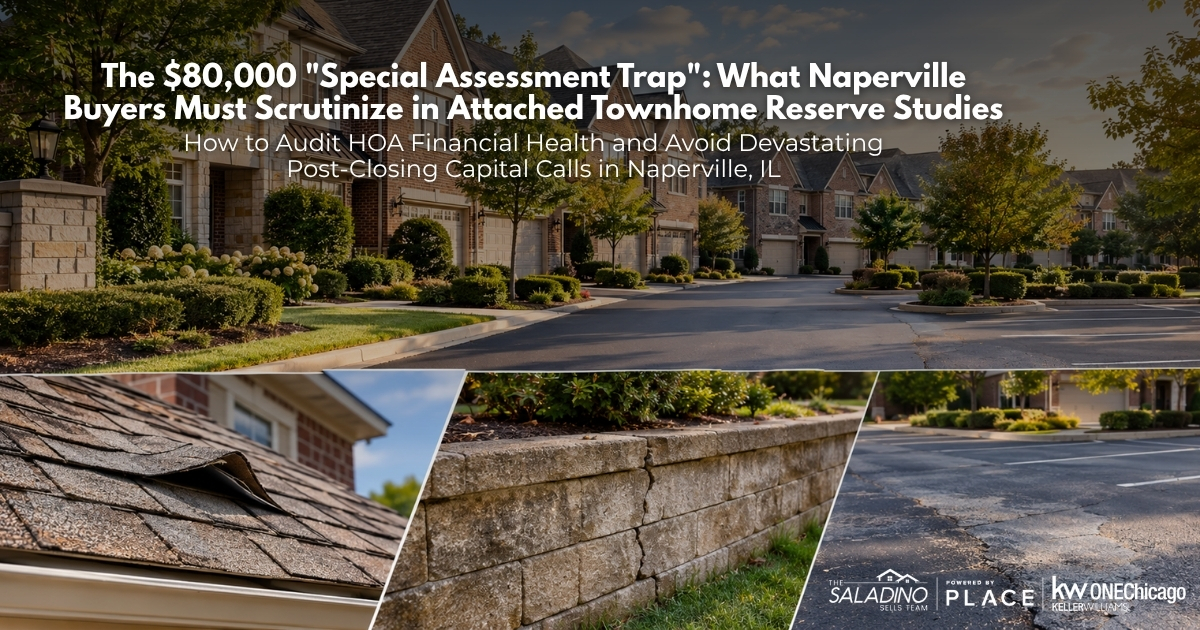
How to Audit HOA Financial Health and Avoid Devastating Post-Closing Capital Calls in Naperville, IL
Purchasing an attached townhome in Naperville offers an unbeatable blend of top-rated school districts, vibrant community amenities, and low-maintenance suburban living. However, beneath the polished brick facades and manicured lawns lies a hidden financial risk that catches unprepared buyers off guard: the surprise special assessment.
Imagine moving into your dream townhome, only to receive a notice six months later stating that every owner owes $80,000 for emergency roof replacements, masonry repairs, or siding overhauls.
At The Saladino Sells Team, we believe buying a home should build wealth—not deliver financial shocks. To protect your investment, you must look beyond the cosmetic features and dive straight into the Homeowners Association (HOA) Reserve Study before clearing your attorney review period.
What Is an HOA Reserve Study?
A Reserve Study is an in-depth financial and physical analysis conducted by a third-party engineering firm. It evaluates the current condition of an attached community's shared exterior elements (roofs, siding, asphalt drives, retaining walls, balconies) and projects the cost to repair or replace them over a 20- to 30-year window.
The study tells the HOA board how much money must be saved in the Reserve Fund each month to pay for these high-ticket capital projects without resorting to special assessments.
The Anatomy of an $80,000 Special Assessment Trap
Special assessments happen when the reserve fund is severely underfunded. When major components reach the end of their useful lives, the HOA board has only two choices: take out a costly commercial loan or levy a direct financial assessment on every homeowner.
| HOA Health Metric | Healthy Association | High-Risk Association (The Trap) |
| Percent Funded | 70% to 100% | Under 30% |
| Funding Strategy | Regular, incremental HOA fee increases | Fixed, artificially low fees with zero savings |
| Deferred Maintenance | Capital projects executed on schedule | Projects repeatedly delayed due to lack of cash |
| Primary Risk | Stable monthly costs, high resale value | Sudden multi-thousand dollar special assessments |
3 Essential Items Naperville Townhome Buyers Must Scrutinize
During the contract attorney review phase, your agent and legal counsel will request standard HOA disclosure documents. Make sure you examine these three critical areas inside the reserve study:
1. The "Percent Funded" Ratio
The single most critical metric in the report is the Percent Funded.
-
70%–100% Funded: Strong financial status. The association is fully prepared for future repairs.
-
30%–69% Funded: Moderate risk. Small special assessments or targeted HOA dues hikes may occur.
-
Below 30% Funded: Red Flag. The HOA is operating hand-to-mouth. A major roof or exterior project will almost certainly trigger a heavy assessment.
2. Deferred Maintenance Timelines
Compare the physical inspection dates in the reserve study against the actual work completed. If the study states that all roofs in the complex were scheduled for replacement two years ago, but the meeting minutes show no active construction, the association is accumulating deferred maintenance. Delayed repairs compound in cost rapidly.
3. Contribution Recommendations vs. Actual HOA Dues
Board members are often reluctant to raise monthly HOA dues because higher fees can make units harder to sell. Look at the reserve study's recommended annual contribution amount. If the engineer recommends raising annual reserve contributions by 8% per year to stay solvent, but the HOA board has voted to cap increases at 0% to 2%, a deficit is quietly growing.
Protect Your Purchase with The Saladino Sells Team
Navigating Illinois HOA disclosures, Section 22.1 financial statements, and reserve studies requires a trained, experienced eye. The Saladino Sells Team helps buyers analyze every layer of a property's financial structure so you never face a devastating surprise after closing.
Thinking about buying or selling an attached townhome in Naperville or the surrounding Chicagoland area? Contact The Saladino Sells Team today for expert market guidance and thorough transaction management.

Michael Saladino
Managing Broker | Saladino Sells Team | Keller Williams ONEChicago | PLACE
or another way