
Published August 17, 2026
The $40,000 "Preservation Penalty": Why Cheap Historic Homes in Near West Aurora Can Hide Eye-Watering Exterior Restoration Mandates

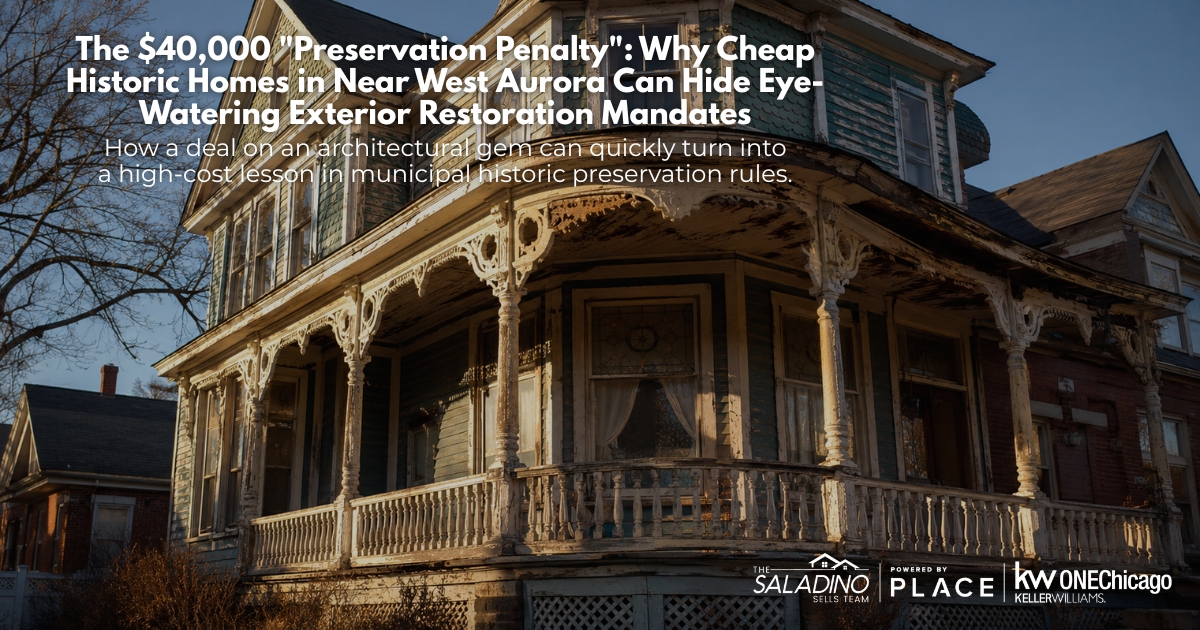
How a deal on an architectural gem can quickly turn into a high-cost lesson in municipal historic preservation rules.
That 1890s Victorian or Craftsman bungalow in Near West Aurora looks like an absolute steal. Listed significantly below the local median price, it features original woodwork, tall ceilings, and unmatched historic character. It feels like the ultimate dream project for an ambitious homebuyer or investor.
However, before submitting an offer, buyers must understand a critical factor that often goes overlooked: Aurora’s local historic preservation guidelines. What looks like a bargain purchase price can quickly trigger what locals call the $40,000 "Preservation Penalty"—a surprise bill caused by mandatory, high-cost exterior restoration requirements.
The Catch Behind Near West Aurora’s Bargain Historic Homes
Near West Aurora contains some of the Fox Valley's most vibrant historic districts, including the Near West Side Historic District and the Tanner Historic District. To maintain the architectural integrity of these neighborhoods, the City of Aurora enforces local historic preservation ordinances managed by the Aurora Historic Preservation Commission (HPC).
When you purchase a home within a designated local historic district, you do not just buy the property—you accept the responsibility to maintain its historical integrity. While these rules keep neighborhoods beautiful and protect property values long-term, they also restrict low-cost exterior updates.
If key exterior features have deteriorated, the city will not allow you to make modern, cost-effective repairs. Instead, you are required by law to restore or replace components using historically accurate materials.
Where the Money Goes: The 4 Big Budget-Busters
Modern construction materials are designed for affordability and easy maintenance, but local historic ordinances often prohibit them. Here is how standard home maintenance costs multiply on a historic home:
| Exterior Component | Standard Modern Replacement | Historic Preservation Requirement | Estimated Cost Difference |
| Windows | Standard Vinyl Insulated Windows | Custom Wood Sashes or Approved Historic Restorations | +$15,000 – $25,000 |
| Siding | Vinyl Siding or Hardie Board | Original Wood Lap Siding (Restored or Milled) | +$10,000 – $20,000 |
| Porches & Trim | Composite Decking / PVC Trim | Custom Architectural Wood Milling & Historic Paint | +$8,000 – $15,000 |
| Roofing & Details | Standard Architectural Asphalt Shingles | Slate, Tile, or Specialty Historical Match Roofing | +$12,000 – $30,000 |
When combined, requiring custom-milled wood siding, historic-grade windows, and authentic porch restoration can easily total $40,000 to $60,000 in mandatory work—far exceeding the initial budget for standard updates.
Understanding the COA (Certificate of Appropriateness)
Before starting any exterior work in an Aurora historic district—including changing window types, painting, rebuilding a porch, or altering siding—homeowners must apply for a Certificate of Appropriateness (COA) through the Historic Preservation Commission.
- Administrative Review: Minor repairs that match existing materials exactly can often be approved quickly by city staff.
- Commission Review: Major structural changes, material modifications, or replacements require a formal public hearing before the HPC.
If an unapproved change is made using non-compliant materials (such as installing vinyl windows without approval), the city can issue stop-work orders, impose daily fines, and force the removal of non-compliant materials at the owner's expense.
3 Steps to Protect Yourself Before Making an Offer
Buying a historic home in Near West Aurora can still be a rewarding investment if approached with the right strategy. Protect your budget by taking these steps prior to removing attorney review or inspection contingencies:
- Verify District Status Immediately: Confirm whether the property sits in a locally designated historic district, a National Register district, or a thematic district. Local districts enforce binding design rules, whereas National Register status is often honorific unless public funding is involved.
- Bring a Historic-Specialized Contractor to Inspection: Standard home inspectors identify structural issues, but specialized historic restoration contractors recognize whether siding can be repaired or must be completely re-milled to meet local guidelines.
- Budget for Preservation Incentives: Explore available state and municipal programs. Illinois offers the Property Tax Assessment Freeze Program for historic owner-occupied residences undergoing substantial rehabilitation, which can help offset restoration expenses over an 8-year period.
Partnering with Local Real Estate Experts
Navigating historic preservation codes requires experienced local guidance. The Saladino Sells Team helps buyers and sellers navigate Near West Aurora real estate with complete transparency—ensuring you know exactly what you are buying, what rules apply, and how to protect your investment for years to come.
Thinking about buying or selling a historic home in Aurora? Reach out to The Saladino Sells Team today for expert local representation and a clear strategy.

Michael Saladino
Managing Broker | Saladino Sells Team | Keller Williams ONEChicago | PLACE
or another way