
Published May 29, 2026
Good Fences, Good Neighbors: Navigating Tree Laws, Property Lines, and HOA Rules in the Northern Suburbs

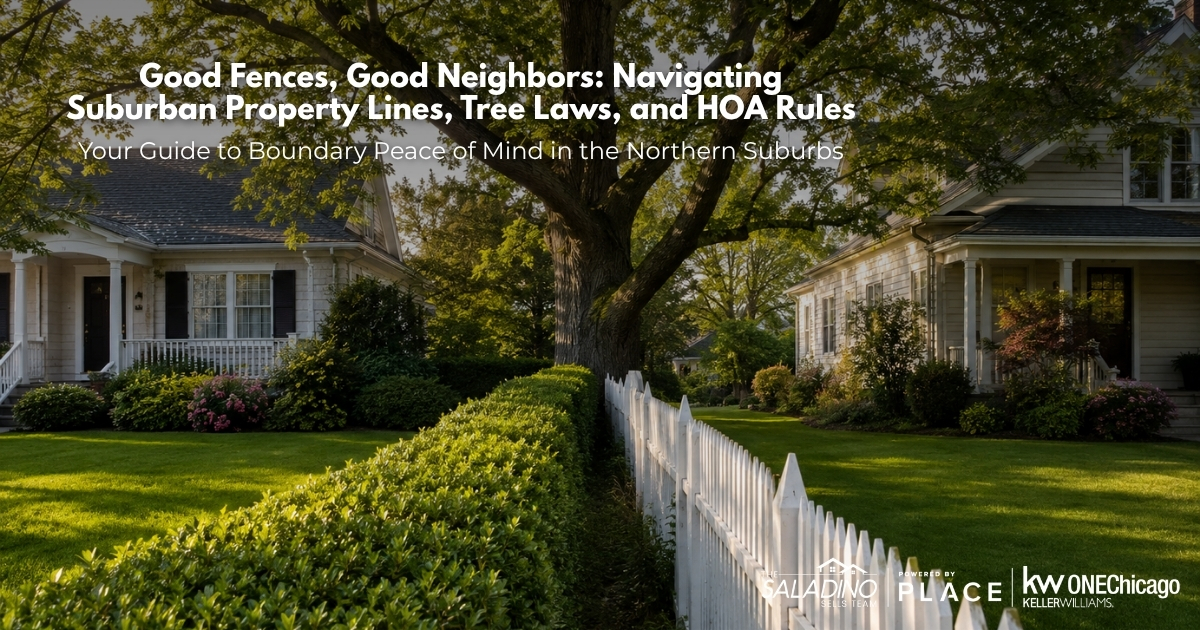
Your Guide to Boundary Peace of Mind in the Northern Suburbs
There is a reason the old proverb "good fences make good neighbors" has stood the test of time. In the beautiful, tree-lined communities of the Northern Suburbs, our properties are our sanctuaries. However, nothing disrupts suburban bliss faster than a property line dispute, a rogue tree branch, or an unexpected notice from your Homeowners Association (HOA).Whether you are looking to build a new privacy fence, wondering who is responsible for the oak tree leaning over your roof, or trying to decode your community’s bylaws, The Saladino Sells Team has you covered.
Here is your essential guide to navigating property lines, tree laws, and HOA rules in the Northern Suburbs.
1. Finding the True Line: Property Boundaries
Before you dig a single post hole or plant a new privacy hedge, you need to know exactly where your land ends and your neighbor’s begins. Relying on "visual guessing" or where the lawnmower stops is a recipe for trouble.- Get a Professional Survey: The only foolproof way to know your boundaries is through a professional land survey. If you bought your home recently, check your closing documents—you likely have one on file.
- Locate the Pins: Surveyors place iron pins at the corners of your property. If they are buried, a metal detector can help you find them.
- The Encroachment Trap: Building even a few inches over your property line can result in expensive legal headaches, or worse, having to tear down your brand-new fence.
2. Tree Laws: Who Owns the Branch?
Mature trees are one of the biggest selling points in the Northern Suburbs, but they are also a frequent source of neighborhood friction.The Golden Rule of Tree Law: Ownership of a tree is determined by where the trunk sits at the base. If the trunk is entirely on your land, it’s your tree. If it sits right on the line, it is a "boundary tree," and you share ownership with your neighbor.
Trimming Overhanging Branches
If your neighbor's tree has branches hanging over your yard, you generally have the legal right to trim them back up to the property line. However, you must follow two strict rules:- You cannot cross the property line to do the trimming without permission.
- You cannot trim the tree in a way that harms or kills it. If your pruning destroys the tree, you could be held liable for the cost of replacing a mature tree—which can easily reach tens of thousands of dollars.
Fallen Trees and Storm Damage
If a healthy tree blows over during a suburban storm and damages your property, it is generally considered an "Act of God." In most cases, your own homeowner's insurance will cover your damages. However, if the tree was dead, rotting, and clearly neglected, the tree owner may be held liable for negligence.3. Navigating the HOA Maze
In many Northern Suburb communities, the local government isn't the only entity regulating your yard—your HOA is, too. HOAs have strict Covenants, Conditions, and Restrictions (CC&Rs) designed to maintain neighborhood aesthetics and property values.Before starting any outdoor project, check your HOA guidelines for:
- Pre-Approval Requirements: Many HOAs require you to submit an Architectural Review Committee (ARC) form before installing fences, sheds, or major landscaping.
- Material and Height Restrictions: Chain-link fences might be banned, or fences might be capped at a specific height (e.g., 4 or 6 feet).
- The "Good Side" Rule: It is standard courtesy (and often an HOA requirement) that the smooth, finished side of a fence faces outward toward your neighbors or the street.
Tips for Maintaining Neighborly Harmony
At The Saladino Sells Team, we always say that open communication is worth more than a stack of legal documents. Here is how to keep the peace:- Talk Before You Write a Check: Before you hire a contractor, chat with your neighbor. Let them know your plans to build a fence or trim a tree.
- Share the Cost (If Applicable): If a boundary fence needs repair, a polite conversation might lead to a 50/50 cost split, as both properties benefit from it.
- Put It in Writing: If you and your neighbor agree to a unique boundary arrangement, get it in writing. It protects both of you when it comes time to sell.
Bottom Line
Understanding your rights and responsibilities makes you a better homeowner and a great neighbor. If you are looking to buy or sell a home in the Northern Suburbs and want expert guidance on local communities, HOAs, and property values, we are here to help![Contact The Saladino Sells Team today to chat about your suburban real estate goals!]

Michael Saladino
Managing Broker | Saladino Sells Team | Keller Williams ONEChicago | PLACE
or another way