
Published June 9, 2026
Charging Forward: The Real Cost and Permit Realities of Installing Level 2 EV Chargers in Older Suburban Garages

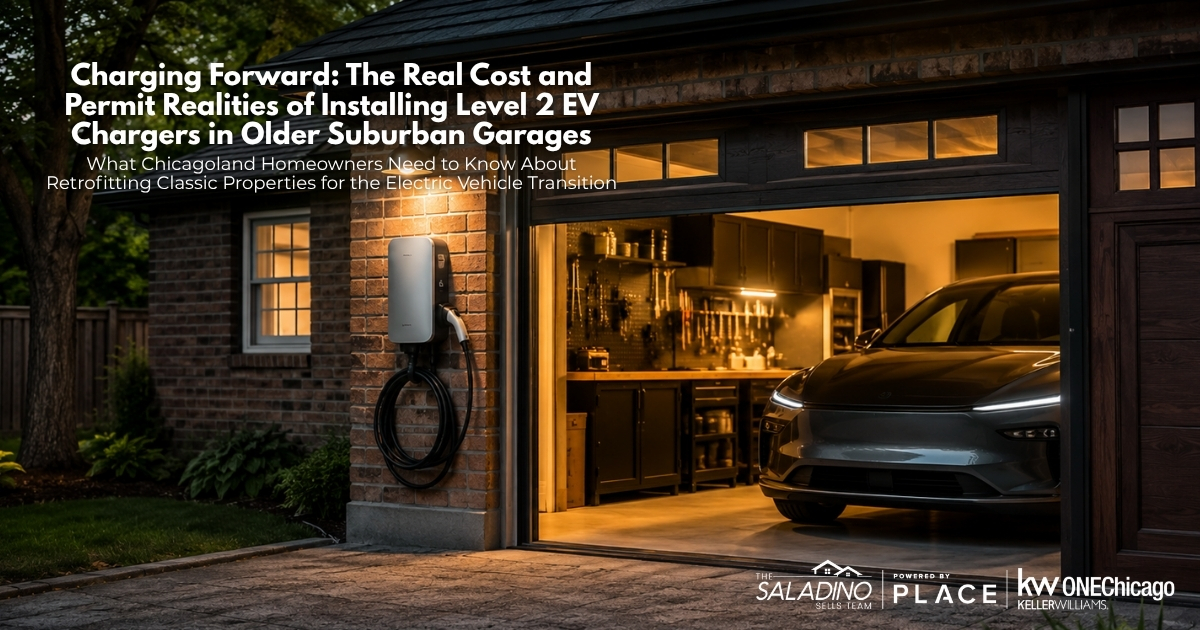
What Chicagoland Homeowners Need to Know About Retrofitting Classic Properties for the Electric Vehicle Transition
The shift toward electric vehicles (EVs) is no longer a futuristic concept—it is actively reshaping the modern real estate landscape. For suburban homebuyers and homeowners, having a dedicated home charging setup is rapidly transforming from a luxury upgrade into an essential property feature.Standard 120-volt wall outlets (Level 1 charging) are notoriously slow, providing only 3 to 5 miles of range per hour. To make EV ownership practical, a 240-volt Level 2 charging station is the gold standard, capable of fully replenishing a battery overnight.
Installing a Level 2 charger in a brand-new construction home is relatively straightforward. However, doing so in an older suburban garage—the kind that defines many of our charming, established neighborhoods—unveils a unique set of infrastructural and bureaucratic challenges.
Before purchasing an EV or listing a home, it is critical to understand the real-world expenses, structural limitations, and local permitting requirements involved in retrofitting an older garage.
1. The Infrastructure Hurdle: Electrical Capacity in Older Homes
The primary obstacle in older suburban properties is the existing electrical infrastructure. Homes built several decades ago were simply not engineered to withstand the energy demands of modern appliances, multi-zone HVAC systems, and high-amperage vehicle chargers simultaneously.The Amperage Bottleneck
Many mid-century or older homes operate on a 100-amp electrical panel. A Level 2 charger typically requires a dedicated 40-amp to 60-amp circuit to operate safely. Attempting to add a load of that size to a 100-amp panel will easily trigger overloads when running other high-draw appliances like a clothes dryer, central AC, or an electric oven.To safely support a Level 2 charger, the electrical service must generally be upgraded to 200 amps.
Attached vs. Detached Garages
The physical layout of the property introduces another significant variable:- Attached Garages: If the electrical panel shares a wall with the garage, running the heavy-duty conduit and wire is relatively simple and cost-effective.
- Detached Garages: This scenario is highly common in older suburbs. Bringing 240-volt power from the main house to a detached garage requires trenching a line through the yard or running overhead wires. This addition alone can rapidly escalate both labor costs and material expenses.
2. Breaking Down the Real-World Costs
An EV charging installation is rarely a flat-rate project. Total expenditures are highly dependent on the baseline condition of the property's electrical grid.| Project Component | Standard/Modern Setup | Older Garage (With Upgrades) |
| Level 2 Charger Hardware | $300 – $700 | $300 – $700 |
| Electrician Labor & Basic Materials | $500 – $1,200 | $1,000 – $2,000+ |
| Electrical Panel Upgrade (to 200 Amps) | Not Required | $1,500 – $4,000 |
| Trenching (For Detached Garages) | Not Required | $1,000 – $3,000 |
| Permits & Inspection Fees | $100 – $200 | $150 – $400 |
| Estimated Total Investment | $900 – $2,100 | $3,950 – $10,100+ |
Financial Silver Lining: While these upfront figures can cause initial sticker shock, homeowners should remember that the Federal Alternative Fuel Vehicle Refueling Property Credit can offset up to 30% of hardware and installation costs (capped at $1,000). Additionally, various state and local utility companies offer localized rebates for installing smart, energy-efficient chargers.
3. The Permitting and Compliance Reality
It is common to assume that a residential upgrade begins and ends with hiring a handyman, but installing a high-voltage system requires strict adherence to local municipality guidelines.Why a Permit is Non-Negotiable
Skipping the building permit process to cut corners is a high-risk gamble. Municipalities require electrical permits for Level 2 installations to ensure the work complies with the National Electrical Code (NEC).Once the installation is complete, a city inspector will review the work to confirm the wiring, breaker sizes, and grounding mechanisms are entirely safe.
The Real Estate Repercussions
From a real estate perspective, unpermitted work can severely complicate a future home sale:- Home Inspections: A sharp home inspector will easily spot a newly added, unpermitted 240-volt line run into an old garage.
- Buyer Hesitation: Savvy buyers and modern real estate agents will demand proof of permits and municipal sign-offs before closing.
- Liability and Insurance: If unpermitted electrical work causes a fire or property damage, homeowner's insurance providers hold the right to deny the claim completely.
How EV Charging Impacts Property Value
As electric vehicle adoption continues its upward trajectory, home charging is transitioning from a novelty to a high-demand commodity.For buyers eyeing older suburban neighborhoods, finding a home that has already undergone a 200-amp panel upgrade and features a fully permitted Level 2 charger is a massive selling point. It saves them the immediate headache, coordination, and unexpected post-closing expense of retrofitting the property themselves.
If you are planning to sell your home and have already upgraded your garage infrastructure, making sure that investment is properly permitted and prominently marketed can provide a distinct competitive edge.
Navigating the Suburban Market? Let’s Connect.
Whether you are looking to purchase a home that can easily accommodate your new EV, or you want to maximize your property's value before hitting the market, navigating these modern infrastructure trends requires local expertise. Reach out to The Saladino Sells Team today to discuss how to position your home for the future of real estate.
Michael Saladino
Managing Broker | Saladino Sells Team | Keller Williams ONEChicago | PLACE
or another way