
Published June 23, 2026
Chicago’s Hidden Subterranean Real Estate: Navigating Historic Utility Vaults and Forgotten Basements

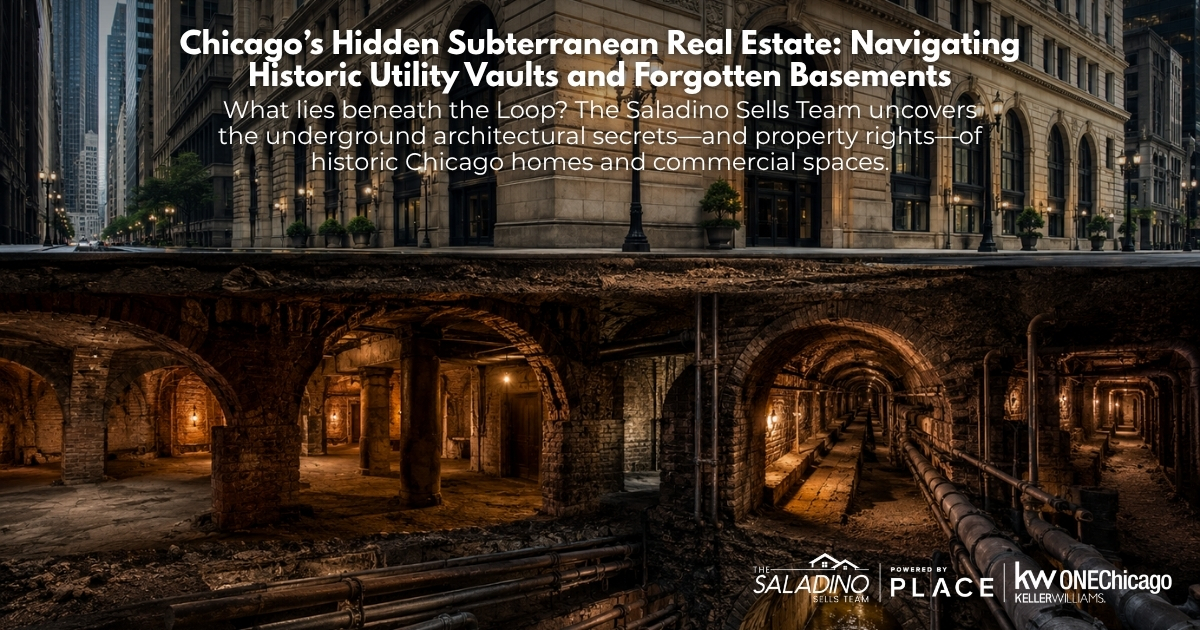
What lies beneath the Loop? The Saladino Sells Team uncovers the underground architectural secrets—and property rights—of historic Chicago homes and commercial spaces.
Chicago is a city built on top of itself—literally. Following the Great Chicago Fire of 1871 and the massive street-raising projects of the mid-19th century, the city effectively elevated its street level by 4 to 14 feet to fix drainage issues.
The result? An incredible, forgotten network of subterranean spaces. From the historic Chicago Tunnel Company's freight tracks to hollowed-out sidewalk utility vaults and forgotten residential basements, the ground beneath your feet holds some of the most fascinating—and legally complex—real estate in the country.
At The Saladino Sells Team, we love the architectural history that makes Chicagoland unique. But when these hidden spaces appear on a modern property deed, they bring unique structural, financial, and legal considerations for buyers and sellers.
When Chicago raised its streets, many property owners extended their basements outward, building walls right up to the new street curb. This created a hollow vault directly underneath the public sidewalk. Historically, these spaces were used for:
Curious about what's hidden on your property's deed or want to explore historic Chicago properties? Contact The Saladino Sells Team today to get started.
Chicago is a city built on top of itself—literally. Following the Great Chicago Fire of 1871 and the massive street-raising projects of the mid-19th century, the city effectively elevated its street level by 4 to 14 feet to fix drainage issues.
The result? An incredible, forgotten network of subterranean spaces. From the historic Chicago Tunnel Company's freight tracks to hollowed-out sidewalk utility vaults and forgotten residential basements, the ground beneath your feet holds some of the most fascinating—and legally complex—real estate in the country.
At The Saladino Sells Team, we love the architectural history that makes Chicagoland unique. But when these hidden spaces appear on a modern property deed, they bring unique structural, financial, and legal considerations for buyers and sellers.
The History Beneath the Sidewalk: What Are Utility Vaults?
If you’ve ever walked through the Loop, River North, or Lincoln Park and noticed glass vault lights (those tiny, purple-tinted glass prisms embedded in the concrete), you are walking directly over a historic utility vault.When Chicago raised its streets, many property owners extended their basements outward, building walls right up to the new street curb. This created a hollow vault directly underneath the public sidewalk. Historically, these spaces were used for:
- Coal Chutes: Dropping fuel directly from wagons into building boilers.
- Freight Transport: Accessing the 60-mile network of narrow-gauge tunnels that quietly moved coal and mail beneath the city until the mid-20th century.
- Extra Storage: Giving dense urban businesses a few hundred extra square feet of usable footprint.
Navigating the Subterranean Landscape: 3 Things Buyers and Sellers Must Know
Owning a piece of Chicago’s history is incredible, but subterranean features require careful due diligence. If you are eyeing a historic property with a vault or sub-basement, keep these factors top of mind:1. The Legal Complexity of "Public Way" Encroachments
In Chicago, the ground beneath a public sidewalk technically belongs to the city. If your building’s basement extends underneath the sidewalk, you are utilizing a Public Way Encroachment.- The Public Way Use Permit: Property owners must maintain a valid permit with the City of Chicago to use this space.
- The Catch: These permits are revocable, require annual fees, and often mandate that the property owner holds specific liability insurance to cover the underground space.
2. Structural Integrity and Moisture Management
Because these vaults sit directly beneath public concrete, they are highly susceptible to the elements. Decades of Chicago winters, road salt, and heavy pedestrian traffic can take a toll.What to look for: Structural concrete degradation (spalling), rusted iron support beams (called jack arches), and water infiltration. When we help clients buy historic properties, we always recommend bringing in a specialized structural engineer to ensure the vault is sound.
3. The Property Value Impact: Asset or Liability?
A well-maintained, dry sub-basement or vault can be retrofitted into an incredible asset—think speakeasy-style wine cellars, private screening rooms, or unique subterranean workspaces. However, if a vault is structurally compromised, the city may require it to be bulkheaded (filled in with concrete slurry), which can be a significant capital expense.Expert Guidance Above and Below Ground
Navigating the hidden layers of Chicago real estate requires a team that understands both local history and complex municipal codes. Whether you’re looking to sell a historic commercial building with old tunnel access or buy a vintage greystone with centuries of stories built into the foundation, The Saladino Sells Team has the deep-rooted local expertise to guide you safely through the process.Curious about what's hidden on your property's deed or want to explore historic Chicago properties? Contact The Saladino Sells Team today to get started.

Michael Saladino
Managing Broker | Saladino Sells Team | Keller Williams ONEChicago | PLACE
or another way