
Published June 26, 2026
The Battle of the Driveways: Who Pays for Overhanging Tree Damage?

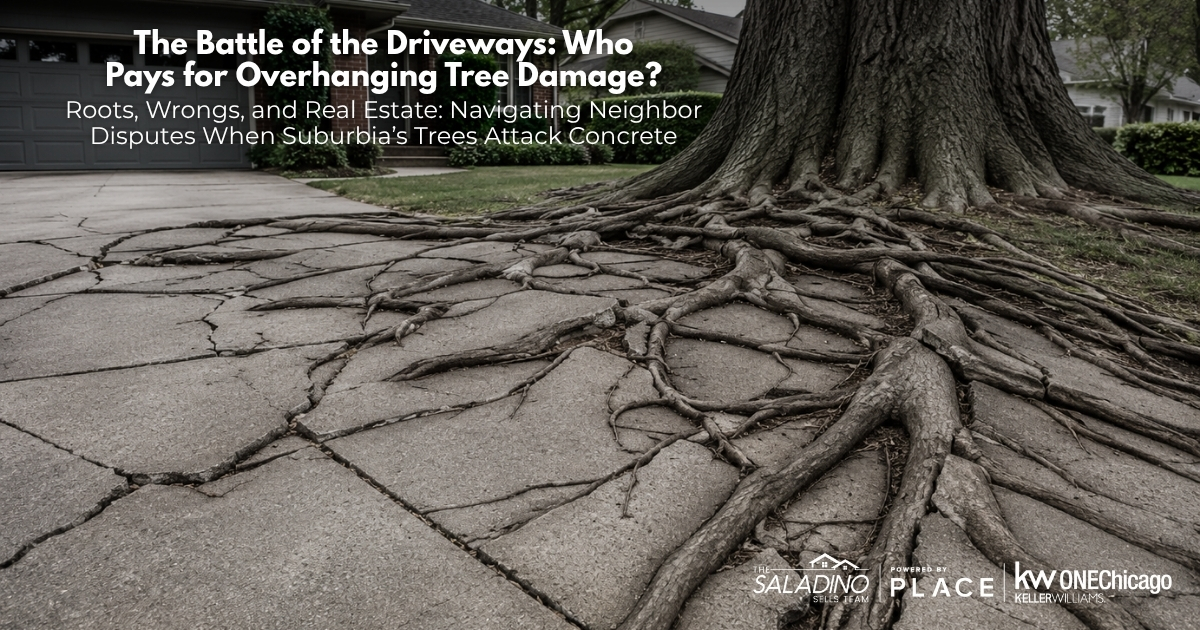
Roots, Wrongs, and Real Estate: Navigating Neighbor Disputes When Suburbia’s Trees Attack Concrete
The Ultimate Suburban Showdown: Tree vs. Concrete
It’s a beautiful Saturday morning. You walk outside with your coffee, look down, and notice it: a massive, jagged crack running right through your pristine concrete driveway. You trace the fracture line, and it leads straight to the base of your neighbor’s prized, 50-foot oak tree.
Suddenly, that majestic tree looks less like a landscaping feature and more like a property-damaging invader.
Property line disputes involving trees are among the most common (and volatile) issues in suburban neighborhoods. When encroaching roots or overhanging branches cause thousands of dollars in property damage, the question isn’t just how to fix it—it’s who writes the check?
Let’s break down the legalities, the responsibilities, and how to handle this delicate situation without starting a neighborhood war.
The General Rule of Thumb: Who Owns the Tree?
In the world of real estate and property law, responsibility almost always stems from ownership.
- Trunk Location is King: If the trunk of the tree sits entirely on your neighbor's property, it is legally their tree.
- The Property Line Plane: You have the legal right to trim branches or roots that extend over your property line. However, there is a massive catch.
The "Do No Harm" Caveat
While you have the right to cut back roots or branches up to your property line, you cannot kill or destabilize the tree in the process. If you chop away critical structural roots to save your driveway, and the tree dies or falls over onto their house during the next storm, you could be held liable for treble damages (triple the cost of the tree).
Who Pays for the Driveway Damage?
Here is where the concrete meets the road. If a neighbor’s tree roots grow under your property and hoist up your driveway, who is financially responsible?
1. The Standard Legal Stance: It’s Usually On You
In many jurisdictions, courts view encroaching roots and branches as a natural occurrence. Because you have the right to mitigate the damage early by trimming the roots at the property line, failing to do so means the financial burden of fixing your driveway usually falls on you (the affected property owner).
2. The Exception: Negligence and "Nuisance" Laws
However, the tides are shifting in modern property law. Some states and municipalities follow variations of the "Hawaii Rule" or "Virginia Rule," which state that if a tree causes sensible personal or property damage, it constitutes a legal nuisance.
If the neighbor was explicitly warned that their tree roots were actively destroying your driveway and they refused to take action (like installing a root barrier or removing the tree), they could potentially be held liable for negligence.
How to Handle the Situation (Step-by-Step)
If you find yourself in the middle of the Battle of the Driveways, don't rush over with an angry note. Follow these steps to protect your wallet and your peace of mind:
[Inspect & Document] ➔ [Talk to Your Neighbor] ➔ [Hire a Certified Arborist] ➔ [Review HOA/City Rules]
- Document Everything: Take clear, high-resolution photos of the driveway damage, the progression of the roots, and the location of the tree relative to the property line.
- Have a Civil Conversation: Approach your neighbor with empathy. They didn't order the roots to grow toward your driveway. Present the issue as a joint problem to solve. They might be willing to split the cost of root pruning or tree removal.
- Hire an Arborist: Before touching any roots, hire a Certified Arborist. They can evaluate the tree and provide a written report detailing how to safely cut the roots without killing the tree.
- Check HOA and Local Ordinances: Your local Homeowners Association or city bylaws may have specific clauses regarding tree maintenance and property damage that override general state laws.
The Bottom Line
When it comes to overhanging trees and cracking concrete, the law often favors proactive maintenance over reactive lawsuits. Talk to your neighbor, consult a professional, and protect your investment.
Are you dealing with a tricky property issue, or looking to buy a home with a bit more breathing room? The Saladino Sells Team is here to help you navigate all aspects of homeownership, from the paperwork to the property lines. Reach out to us today!

Michael Saladino
Managing Broker | Saladino Sells Team | Keller Williams ONEChicago | PLACE
or another way