
Published July 21, 2026
The "2026 Resale Penalty": Why Unpermitted DIY Additions in Central Des Plaines Are Failing Bank Appraisals This Summer

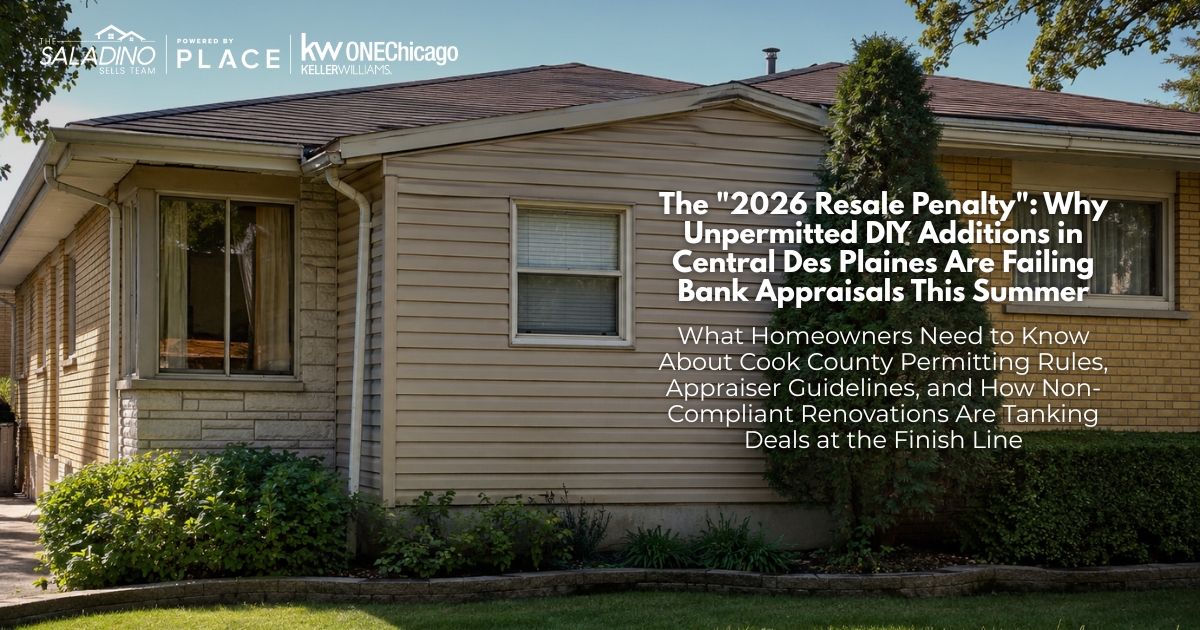
What Homeowners Need to Know About Cook County Permitting Rules, Appraiser Guidelines, and How Non-Compliant Renovations Are Tanking Deals at the Finish Line
Every summer, Central Des Plaines becomes a hotbed for real estate activity. High buyer demand, proximity to Metra transit, and classic suburban charm make neighborhoods like Downtown, Cumberland, and the South Des Plaines corridors prime targets for eager buyers.However, a concerning trend is causing deals to fall through right before closing: the 2026 Resale Penalty.
Lenders have tightened underwriting standards, and appraisers are taking a strict stance on unpermitted DIY work—specifically unpermitted sunrooms, finished basements, enclosed porches, and garage conversions. If you are planning to sell your home this summer, here is what you need to know about how unpermitted work affects bank valuations and how to protect your home's equity before listing.
What Is the "2026 Resale Penalty"?
The Resale Penalty occurs when a buyer makes an offer based on your home's listed square footage or room count, but the bank's appraiser deducts that space from the official property valuation because the work lacked proper municipal permits.In previous market cycles, buyers might have waived appraisal contingencies or overlooked unpermitted work. But with current lending regulations, risk-averse mortgage underwriters are requiring appraisers to verify public municipal records against physical structures.
How an Unpermitted Addition Can Tank Your Deal:
- Step 1: Unpermitted DIY Addition exists on property.
- Step 2: Appraiser cross-checks physical room count with city permit records.
- Step 3: Square footage is excluded or assigned zero value in official appraisal report.
- Step 4: Appraisal comes in significantly below the contract purchase price.
- Step 5: Buyer financing is denied, resulting in the deal collapsing OR the seller being forced to slash the sales price.
Why Central Des Plaines Is Particularly Affected
Central Des Plaines homes—many built between the 1940s and 1970s—are prime candidates for DIY improvements. Over the decades, many homeowners added enclosed three-season rooms, converted attached garages into bonus family rooms, or finished basements without pulling permits from the City of Des Plaines.When an appraiser evaluates a home in Central Des Plaines today, three red flags instantly trigger an audit of city permit logs:
- Unpermitted Square Footage Additions: Adding heated livable space (like an enclosed porch or tandem bedroom) that is not reflected in official Cook County Assessor records.
- Electrical and HVAC Non-Compliance: Unpermitted electrical subpanels, DIY recessed lighting, or unvented heating units added in converted areas.
- Egress and Safety Issues: Finished basement bedrooms that lack proper egress windows or compliant ceiling heights.
Key Takeaway: If the City of Des Plaines doesn't have a record of a final inspection sign-off, mortgage appraisers will generally give that space zero value in their formal appraisal report—or worse, require costly remediation before the lender releases funds.
Permitted vs. Unpermitted DIY Addition Comparison
Permitted Addition
- Appraiser Square Footage Count: Fully included in Gross Living Area (GLA)
- Contributory Market Value: 100% of fair market value
- Lender Underwriting Status: Approved
- Buyer Financing Risk: Low
- Seller Legal Exposure: Fully disclosed & compliant
Unpermitted DIY Addition
- Appraiser Square Footage Count: Excluded from Gross Living Area (GLA)
- Contributory Market Value: $0 to negative value (cost-to-cure deduction)
- Lender Underwriting Status: Conditional / Hold pending permit proof
- Buyer Financing Risk: High (Mortgage denial risk)
- Seller Legal Exposure: Potential liability for non-disclosure
3 Steps to Avoid the Resale Penalty Before Listing
If you suspect your home has unpermitted work—or if you inherited DIY renovations from a previous owner—don't wait for a buyer's appraiser to flag it. Take these steps before putting your property on the market:- Pull Your Home’s Permit History: Request a Freedom of Information Act (FOIA) search or visit the City of Des Plaines Building & Code Enforcement department to check historical permits on your parcel.
- Explore Retroactive Permitting (As-Built Permits): In many cases, the city allows homeowners to apply for "as-built" permits. A licensed contractor can inspect the work, ensure it meets current safety codes, and obtain a retrofitted permit sign-off.
- Price Strategically with Local Market Experts: Working with a hyper-local real estate team ensures your home is priced accurately, setting realistic expectations while avoiding deal-killing appraisal surprises.
Partner with The Saladino Sells Team
Navigating local zoning laws, appraisal requirements, and home preparation can feel complex, but you don't have to do it alone. At The Saladino Sells Team, we combine deep local expertise in Cook County and Des Plaines with data-driven pricing strategies to protect your equity and deliver smooth, hassle-free closings.Planning to sell your home in Central Des Plaines this season? Contact The Saladino Sells Team today for a complimentary home valuation and pre-listing strategy consultation.

Michael Saladino
Managing Broker | Saladino Sells Team | Keller Williams ONEChicago | PLACE
or another way