
Published August 19, 2026
The "1950s Plumbing Penalty": Why Mid-Century Ranches in Central Des Plaines Are Failing Sewer Line Inspections

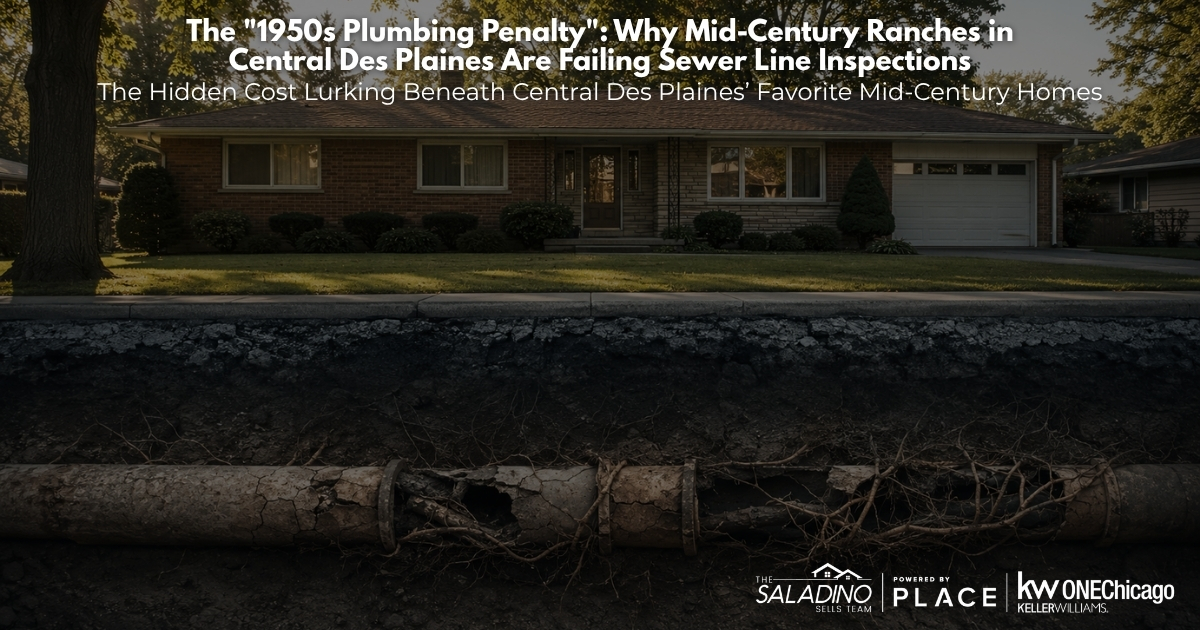
The Hidden Cost Lurking Beneath Central Des Plaines’ Favorite Mid-Century Homes
Mid-century ranch homes in Central Des Plaines offer charming curb appeal, solid construction, and spacious layouts. However, home buyers and sellers are discovering an expensive hidden issue during routine transactions: the "1950s Plumbing Penalty."
As these homes cross the 70-year mark, their original underground sewer infrastructure is reaching the end of its functional life. Sewer scope inspections frequently reveal major failures in cast iron and clay tile pipes, turning routine real estate transactions into stressful negotiations.
What Is the "1950s Plumbing Penalty"?
The "1950s Plumbing Penalty" refers to the sudden, unexpected repair or replacement costs homeowners face when original post-WWII plumbing materials fail inspection. During the 1950s building boom in Des Plaines, two main materials were used for main sewer lateral lines connecting homes to the municipal sewer system:
-
Cast Iron Pipes (Under the Slab): Cast iron was the standard material installed directly beneath concrete foundation slabs.
-
Clay Tile Pipes (Yard Line to Main): Vitrified clay tile was typically used from the edge of the foundation out to the street connection.
While built to last for decades, both materials have a natural lifespan of 50 to 70 years. Because Central Des Plaines ranches were largely constructed between 1950 and 1960, these systems are now past their expiration date.
Why 1950s Sewer Lines Fail Modern Inspections
Sewer scope cameras frequently uncover three major issues in mid-century Central Des Plaines properties:
1. Cast Iron Tuberculation and Bottom Channel Erosion
Over time, wastewater causes cast iron pipes to corrode internally through a process called tuberculation. Rust buildup creates a rough, jagged surface that catches toilet paper and debris, causing frequent backups. In severe cases, the bottom of the cast iron pipe completely erodes away, allowing wastewater to channel directly into the soil beneath the slab foundation.
2. Clay Tile Root Intrusion and Offset Joints
Clay tile pipes were installed in short sections joined together with primitive mortar. Over decades, tree roots penetrate these joints searching for moisture. As root masses expand inside the pipe, they fracture the tile and cause offsets (where sections of the pipe slip out of alignment), stopping wastewater flow entirely.
3. Orangeburg Pipe Collapse
Though less common than cast iron, some 1950s builds utilized Orangeburg pipe (a coal tar-impregnated wood fiber pipe). Under decades of ground pressure, Orangeburg pipes deform into an oval shape, delaminate, and eventually collapse completely.
The Local Des Plaines Factor: Soil and Trees
Central Des Plaines features rich, moisture-retentive soil conditions and mature tree canopies. While excellent for landscaping, these conditions accelerate main sewer line failure:
-
Expansive Soil Movement: Shifting clay soils crack brittle 1950s clay lines and break aging cast iron connections.
-
Aggressive Root Systems: Mature oaks, maples, and silver softwoods found across Des Plaines neighborhoods actively seek out leaking pipe joints, filling sewer lines with dense root webs.
What Buyers and Sellers in Central Des Plaines Need to Do
For Sellers
Do not wait for a buyer's inspector to discover a main sewer line collapse.
-
Order a Pre-Listing Sewer Scope: Hire a licensed plumber to run a video camera from your main stack out to the municipal connection.
-
Fix Issues Early: Identifying root intrusion or cast iron cracking before going to market allows you to hydro-jet, re-line (CIPP epoxy lining), or replace damaged pipe on your schedule—preventing a buyer from demanding last-minute price credits.
For Buyers
A standard home inspection does not check underground sewer lines.
-
Always Add a Sewer Scope Contingency: Invest in an independent sewer inspection before closing. A standard scope costs between $250 and $500, which is negligible compared to a $10,000–$25,000 full sewer line replacement.
-
Differentiate Between Repair Types: Trenchless epoxy lining (CIPP) is significantly less expensive than traditional open-trench excavation or cutting open a concrete basement floor.
Protect Your Investment with The Saladino Sells Team
Navigating sewer line inspection negotiations requires hyper-local real estate expertise. Whether you are selling a classic mid-century ranch or buying your dream home in Central Des Plaines, The Saladino Sells Team helps you identify red flags early and safeguard your equity.
Planning a move in Central Des Plaines? Contact The Saladino Sells Team today for expert local guidance on marketing, buying, and negotiating your next home purchase.

Michael Saladino
Managing Broker | Saladino Sells Team | Keller Williams ONEChicago | PLACE
or another way